Tamra Jal · 5000 Years
$41.49 CAD
Buy on Amazon ↗
Crafted in India·Designed in Canada·Leakproof·Plastic-Free

99.95% Pure Copper·950 ml·Single-Wall·Lacquer-Free

Every DIPHORIA vessel is shaped by hand and finished with care — built to carry the morning water tradition with quiet precision.

"Water stored in a copper vessel for 8+ hours becomes infused with the natural properties of copper — a practice celebrated in Charaka Samhita and Sushruta Samhita."
Ayurveda, India's ancient system of traditional wellness, has long regarded copper as a revered material. The practice of drinking water stored in copper vessels — known as Tamra Jal — is rooted in thousands of years of tradition and is experiencing a quiet renaissance in modern ritual culture.
Copper vessels have traditionally been chosen for storing drinking water — a practice celebrated across generations
Ancient texts describe drinking copper-stored water first thing in the morning as part of the daily Tamra Jal ritual
In Ayurveda, copper is traditionally associated with Vata, Pitta, and Kapha — the three foundational energies of classical texts
Choose copper over plastic — a sustainable, reusable vessel that improves with age
Every sip from a DIPHORIA bottle connects you to an ancient lineage of conscious living. When you choose copper, you choose intention over convenience, tradition over trends, and purity over plastic.
Each bottle crafted from 99.95% pure copper. 950ml / 32oz capacity. Precision screw cap. Hand-polished finish. Available exclusively on Amazon Canada.
Every bottle is built to the highest standard — no shortcuts, no compromises, no inner coatings.
No mixed metals, no alloys, no plating. Solid pure copper throughout — verified and tested.
Unlike cheaper alternatives, DIPHORIA bottles have zero lacquer or coating inside — pure copper touches your water.
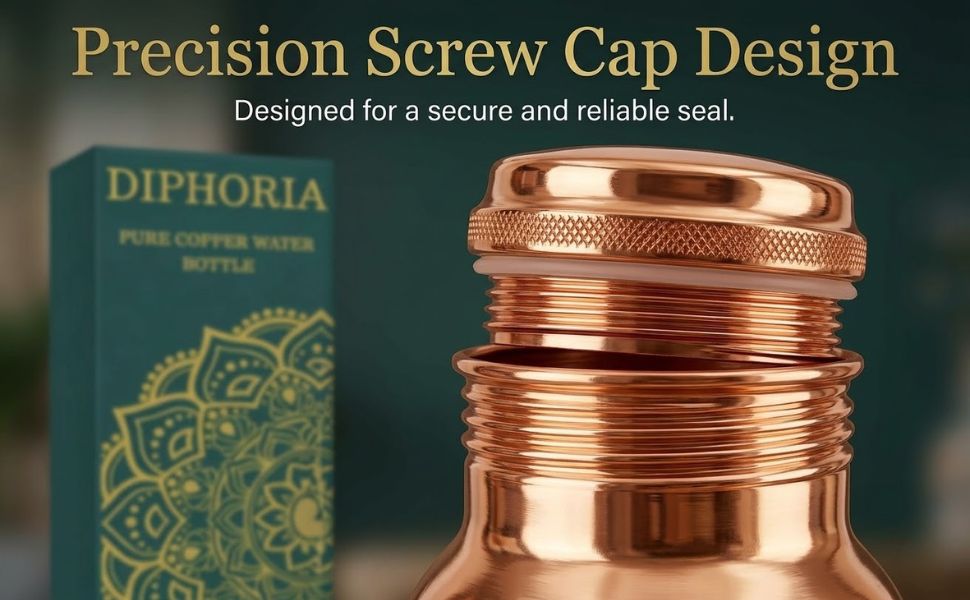
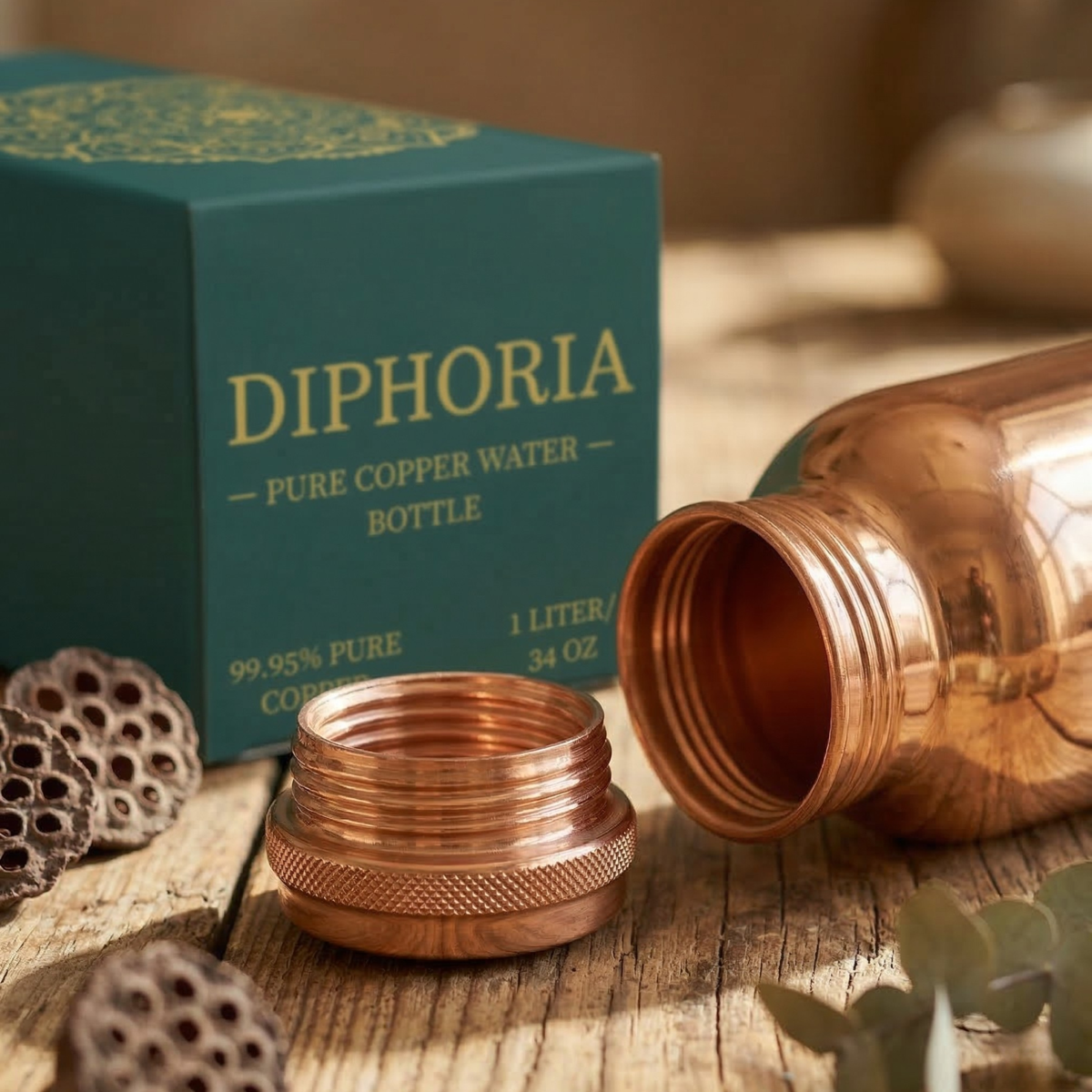
Precision-machined threaded cap with rubber gasket — tested to prevent any leaks, even upside down in your bag.
Fast, reliable shipping with Amazon's world-class fulfillment. Easy returns and full buyer protection.
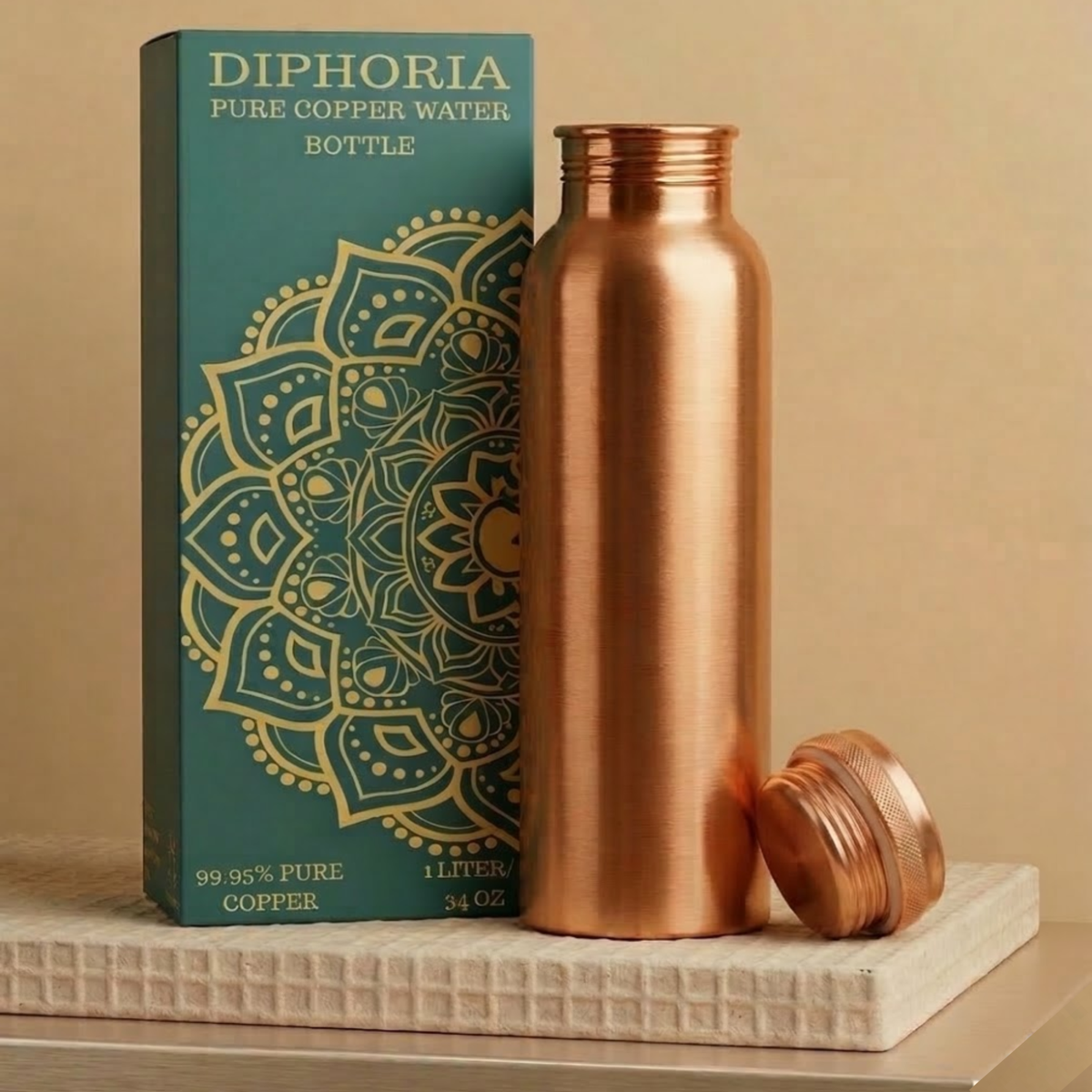
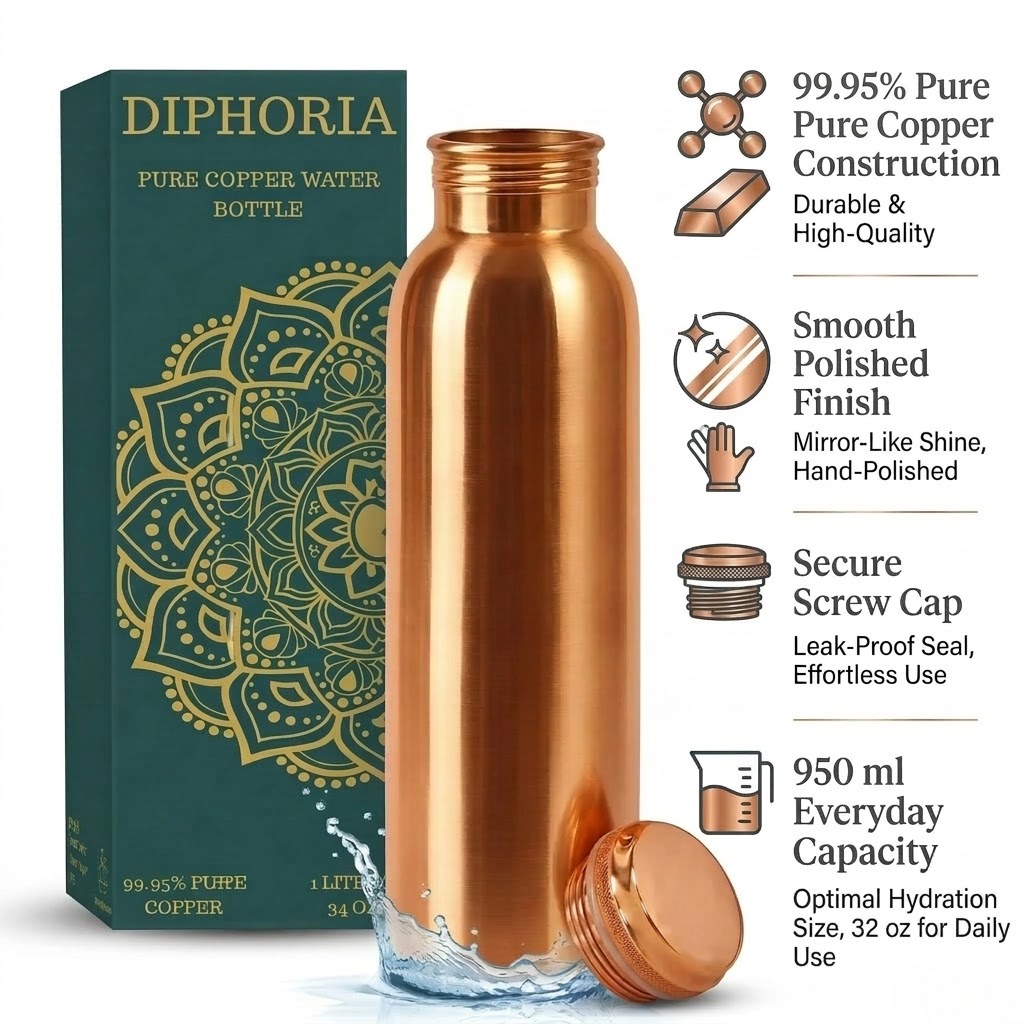
Not all copper bottles are equal. The difference is in the purity, the construction, the finish — and the intention behind every detail.
Most competitors use mixed or plated metals. DIPHORIA uses only 99.95% pure copper throughout — no alloys, no shortcuts.
Our knurled copper cap is machined for a perfect seal. No loose lids, no drips, no compromises in your bag or backpack.
Each bottle is individually hand-polished to a smooth, mirror-like shine. You can see the craftsmanship the moment you hold it.
Teal box with gold mandala, jute bag, and a handwritten-style thank you card. A gift that looks as beautiful as it performs.
The Ayurvedic morning ritual is simple, powerful, and timeless.
Fill your DIPHORIA copper bottle with fresh, clean water before bed
Let water rest in the copper vessel for 8+ hours. Ancient wisdom at work
Upon waking, drink on an empty stomach. Begin your day with Tamra Jal
Take your DIPHORIA bottle everywhere. Stay hydrated, stay connected to tradition
"We didn't create copper water vessels. We simply honored what our ancestors already knew."
DIPHORIA was born from a deep respect for Ayurvedic tradition and a belief that ancient wellness practices deserve a place in modern daily life. We are a Canadian family brand, rooted in Indian heritage, building something we are proud to carry into the world.
The name DIPHORIA reflects our commitment to creating products that bring a sense of joy and well-being — euphoria through purity. Every bottle we craft is a small act of choosing intention over convenience, tradition over trend.
We believe that the vessel you carry your water in matters. Copper has been treasured across Indian, Egyptian, and Roman civilizations for its remarkable natural properties. We are simply bringing that wisdom to Canadian households — one bottle at a time.
"Absolutely beautiful bottle. The quality feels premium the moment you hold it — solid, weighty, and the finish is flawless. I've been doing the morning Tamra Jal ritual for 3 weeks and I love it."
"I was skeptical at first but this bottle truly feels different from others I've tried. The packaging alone made me feel like I received a luxury gift. Leaked zero drops even in my gym bag."
"My mother always told me about drinking from copper vessels. Finding DIPHORIA on Amazon Canada felt like finding a piece of home. The jute bag packaging is beautiful. Gifted 3 already."
Natural oxidation (patina) inside your copper bottle is a positive sign of genuine pure copper — completely natural and non-toxic. Easily restored with one of two simple methods:
Lemon juice + salt paste. Apply, let sit, rinse.
White vinegar + warm water. Fill, shake, rinse.
Questions about your order, care instructions, or just want to share your DIPHORIA experience? We are a small family brand and we read every message personally.
Vancouver, British Columbia, Canada